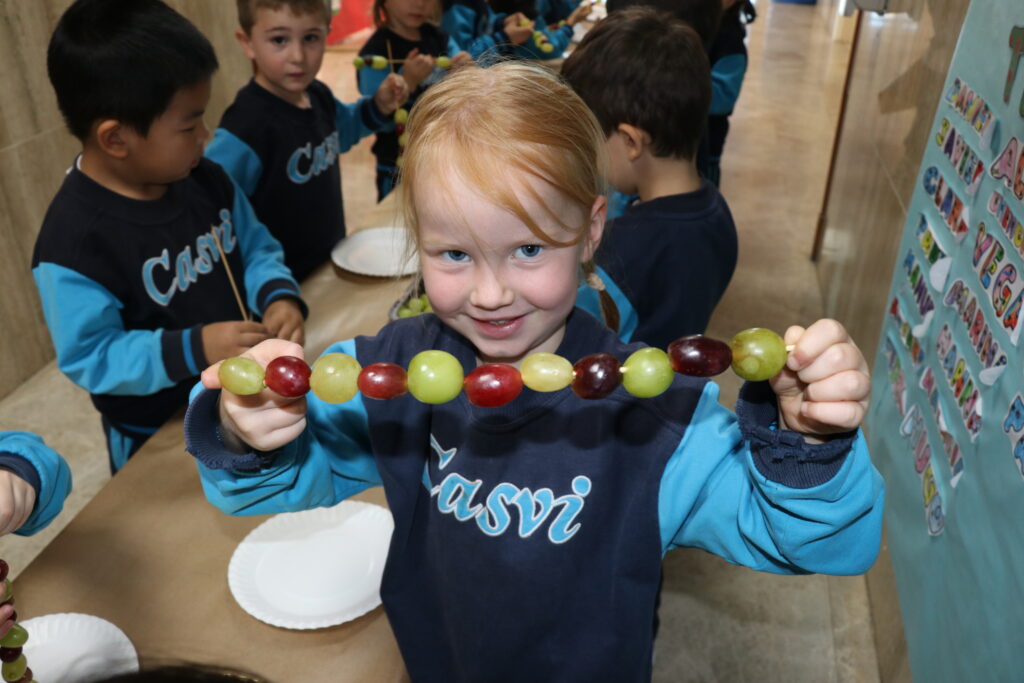
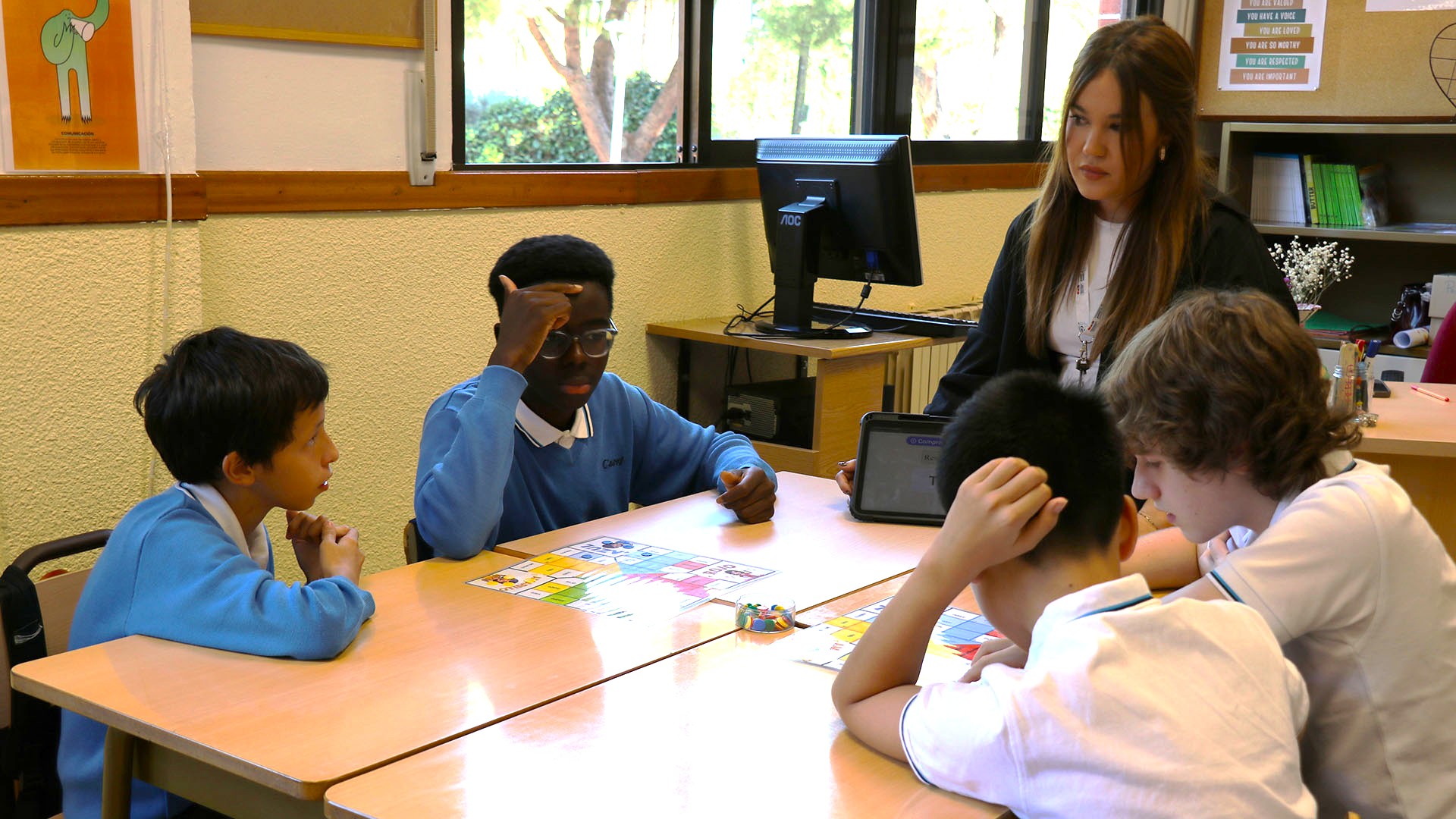
Motivation is one of the key factors in learning. When students are engaged, participate and understand the meaning of what they are doing, knowledge becomes lasting. In this context, gamification in the classroom has established itself as an effective methodology for improving comprehension, participation and the development of essential skills.
WHY DOES GAMIFICATION IMPROVE LEARNING?
Gamification in the classroom applies game dynamics—challenges, rules, roles, cooperation—to the educational environment. It is not about ‘playing for the sake of playing’. It is about creating learning experiences that spark curiosity, critical thinking, and intrinsic motivation.
Among its main benefits are:
- Greater involvement and attention from students
- Active and meaningful learning
- Improved communication and teamwork
- Development of autonomy and decision-making
- Transferring what has been learnt to real-life contexts
Numerous educational studies agree that when students actively participate in their learning process, learning is deeper and more lasting.
GAMIFICATION IN THE CLASSROOM AND THE IB APPROACH
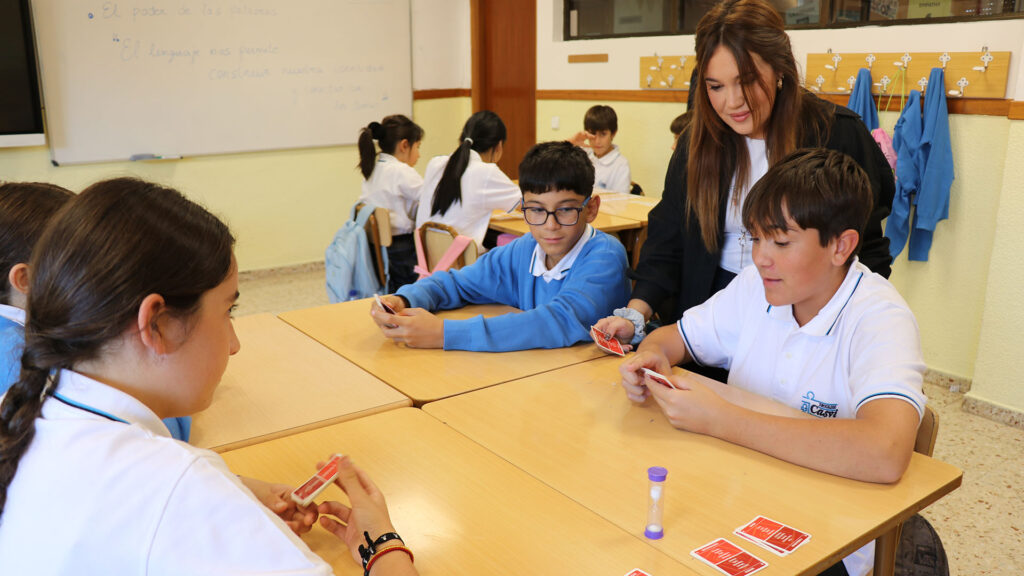
At Casvi Villaviciosa, gamification is naturally integrated into the International Baccalaureate methodology, which places the student at the centre of learning and promotes inquiry, reflection and the development of skills. (IB) methodology, which places the student at the centre of learning and promotes inquiry, reflection and the development of skills.
The teacher acts as a guide, designing experiences that allow the pupil to experiment, make mistakes, reflect, and learn from their mistakes. Always from a structured framework and with pedagogical meaning.
A PRACTICAL EXAMPLE IN FIRST YEAR OF SECONDARY EDUCATION: LANGUAGE AS AN EXPERIENCE
A clear example of the benefits of gamification in the classroom is a session developed in First Year of Secondary Education (MYP) designed by Marta Bernal, language teacher at Casvi Villaviciosa.
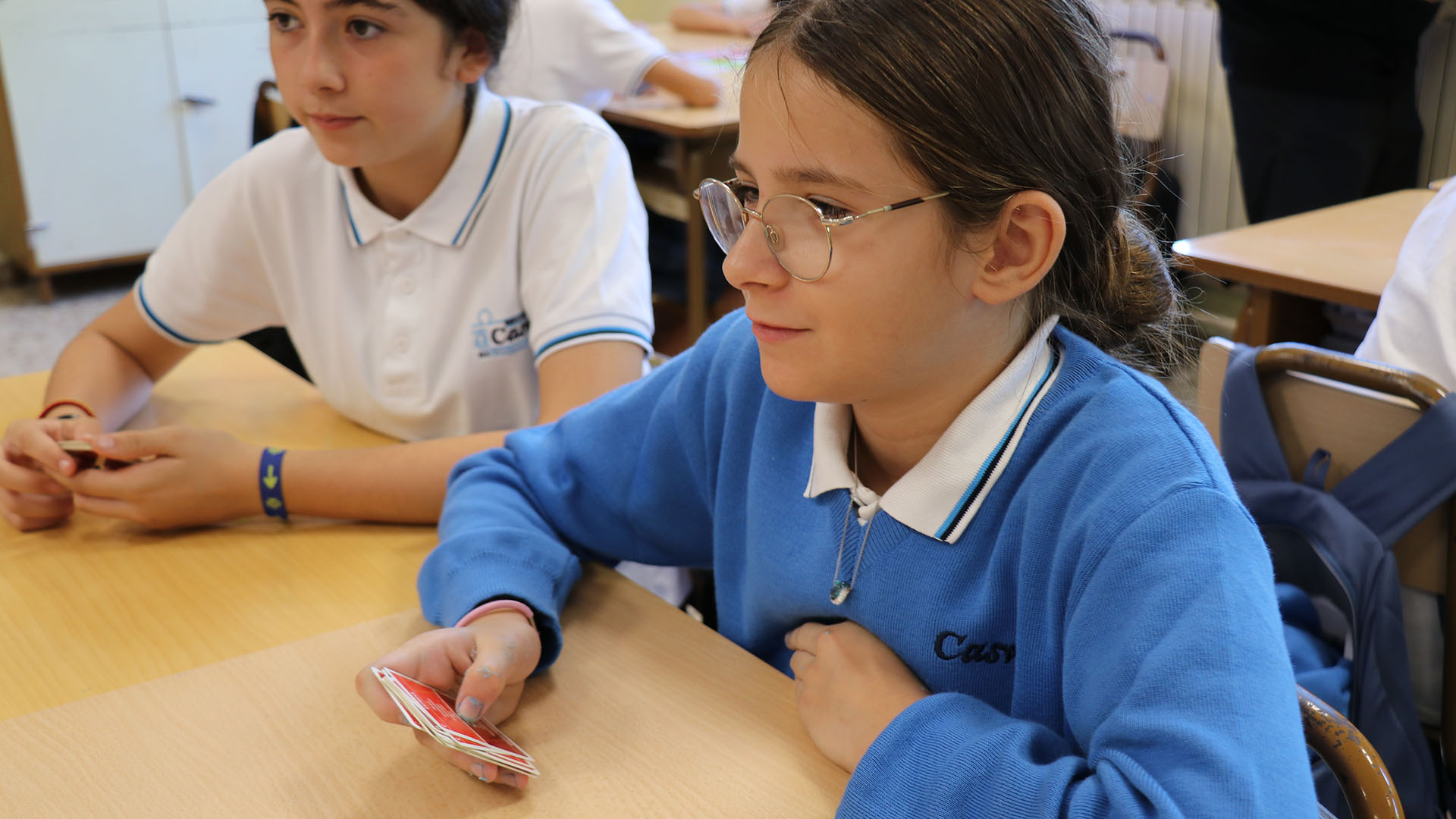
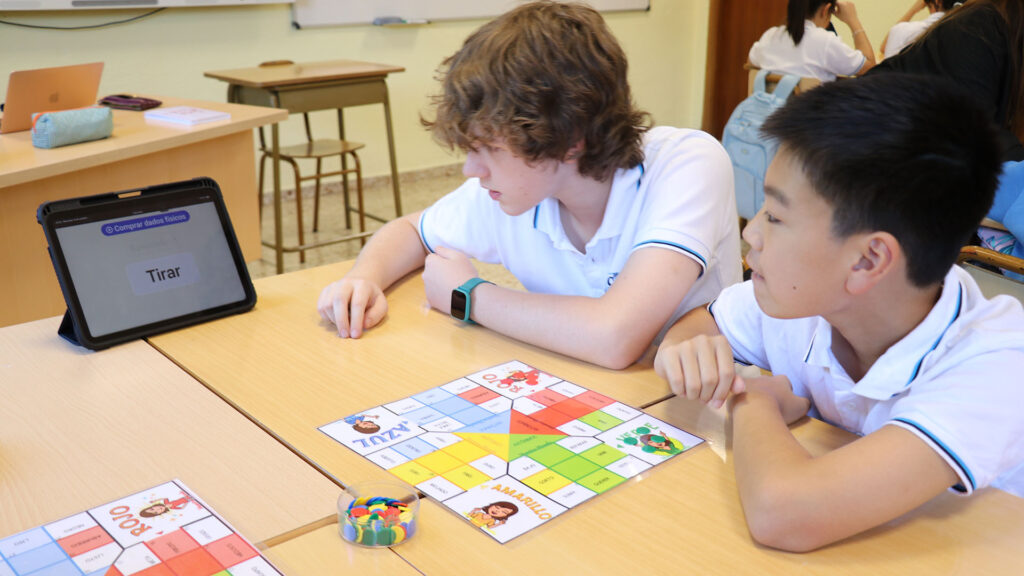
The activity was part of the unit on inquiry “Communication as a tool for understanding and transforming the world” and was organised as a workshop by stations. The students, working in teams, rotated through different language games designed to reinforce curricular content.
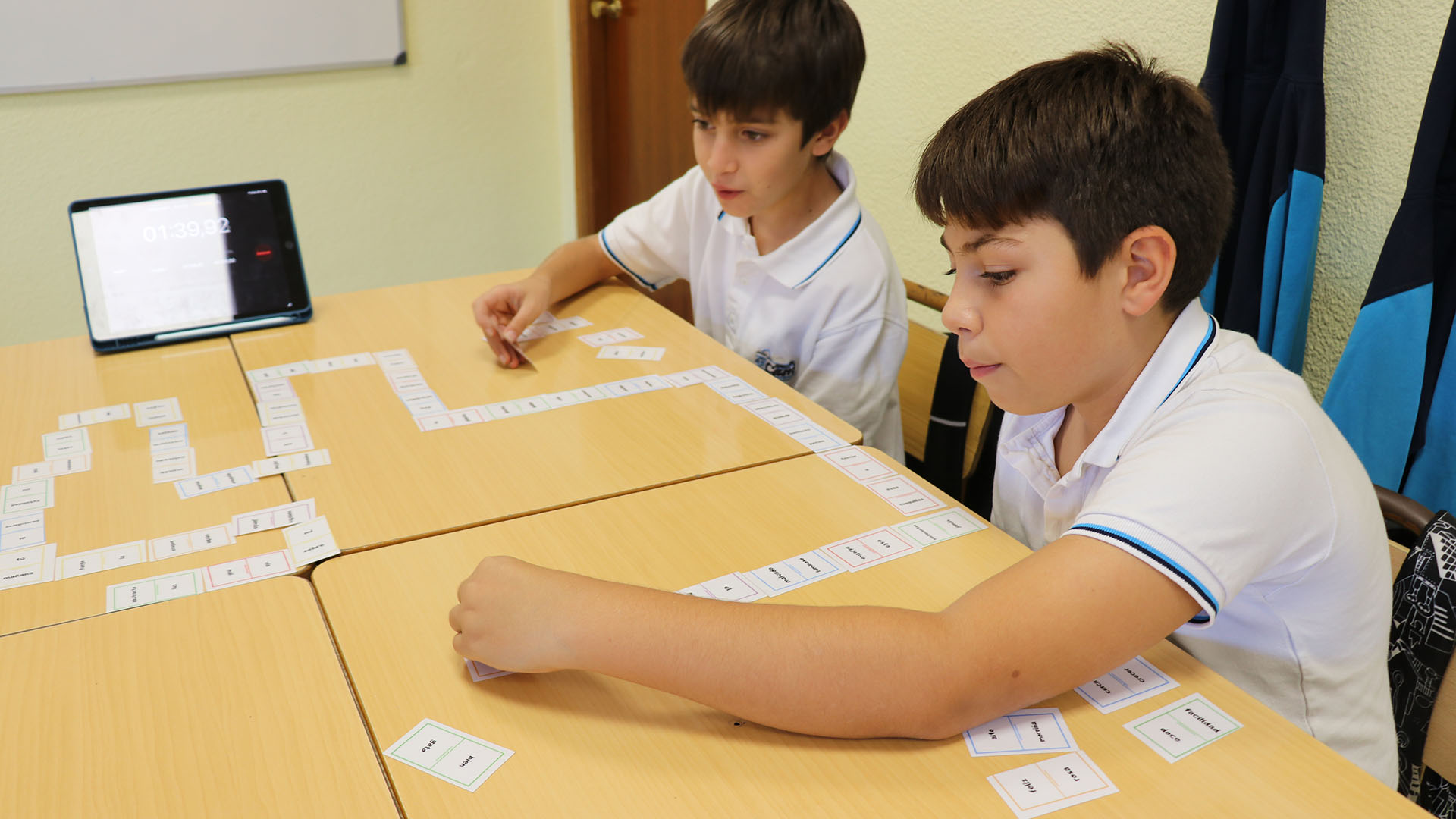
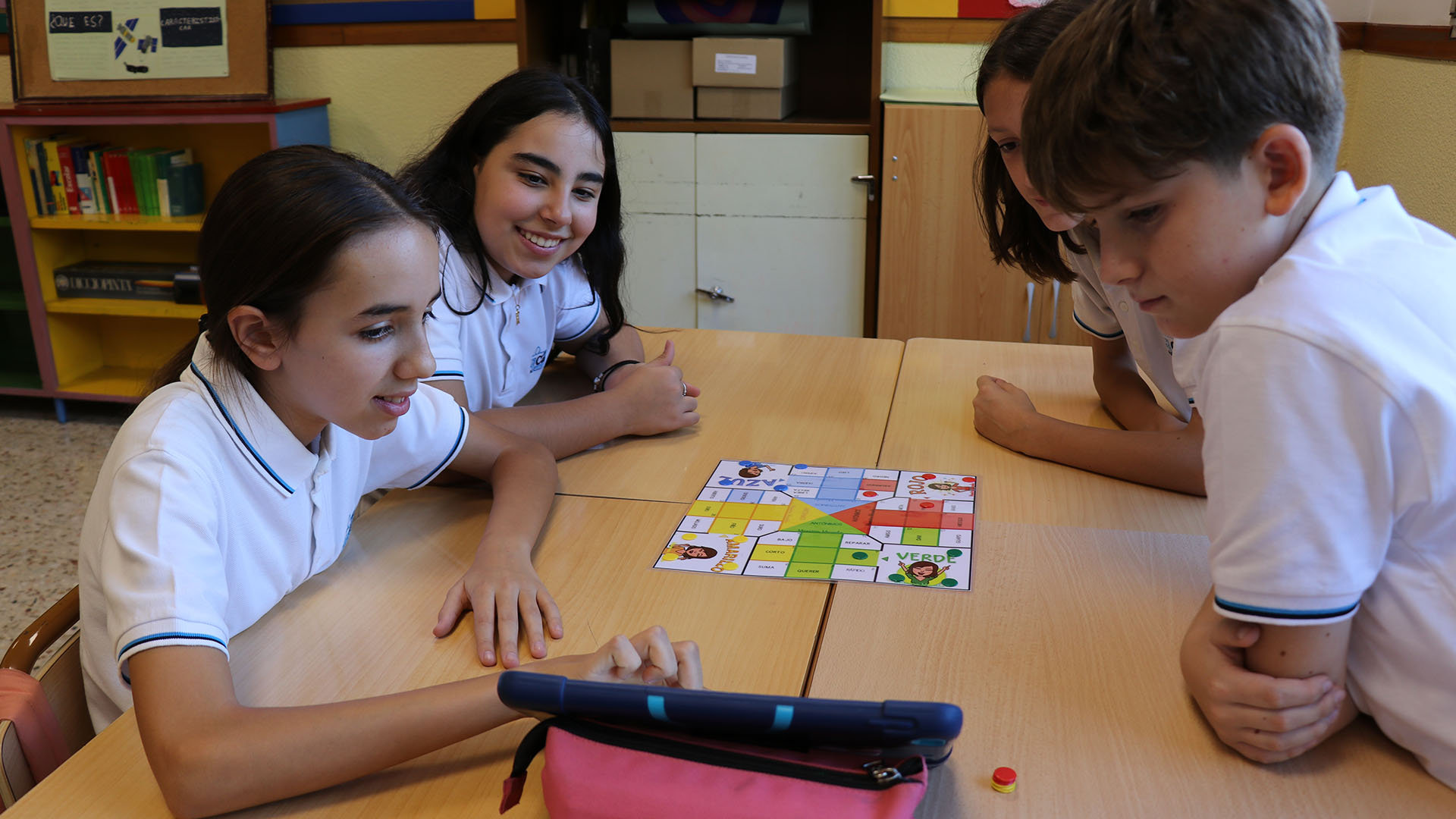
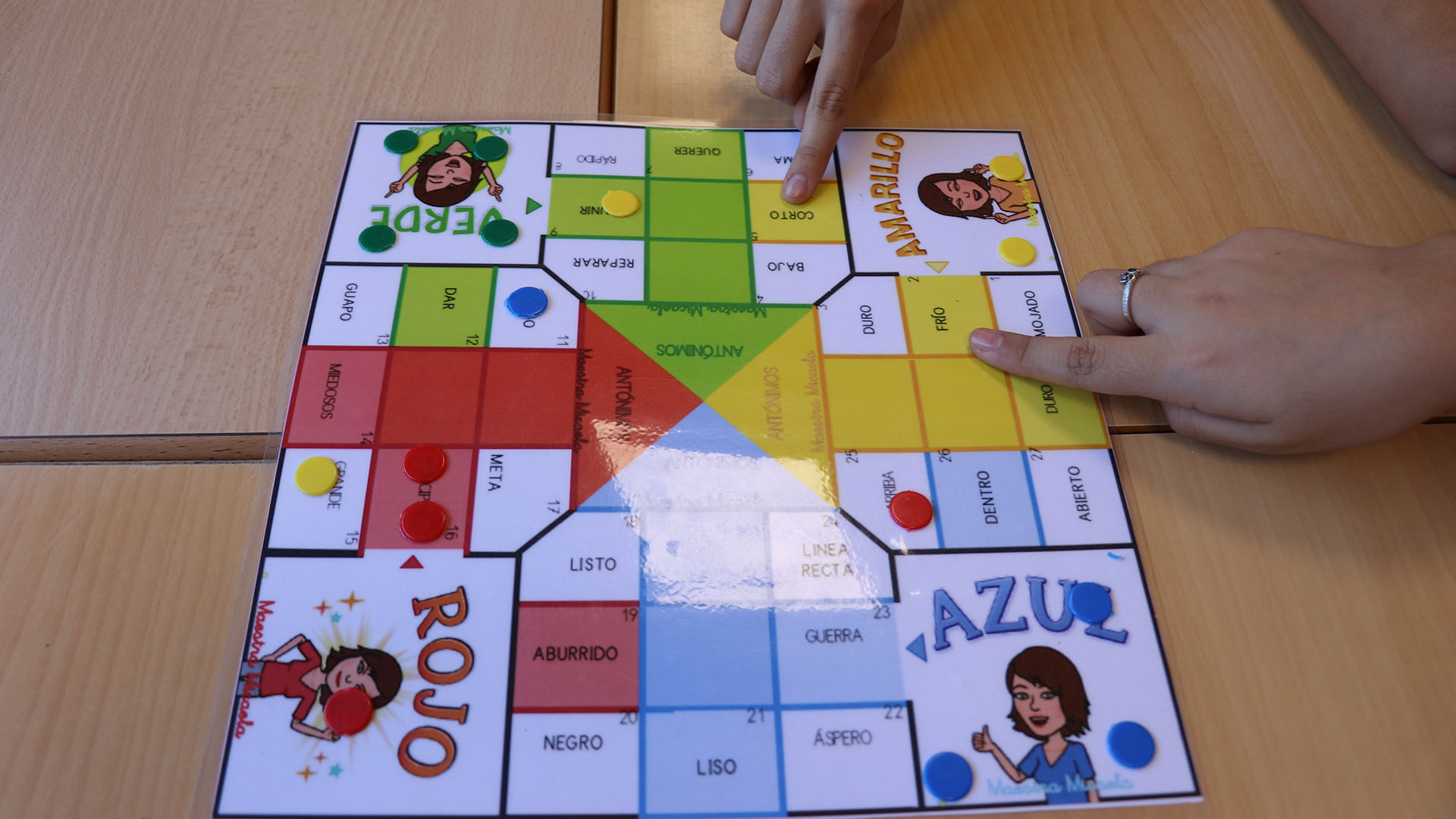
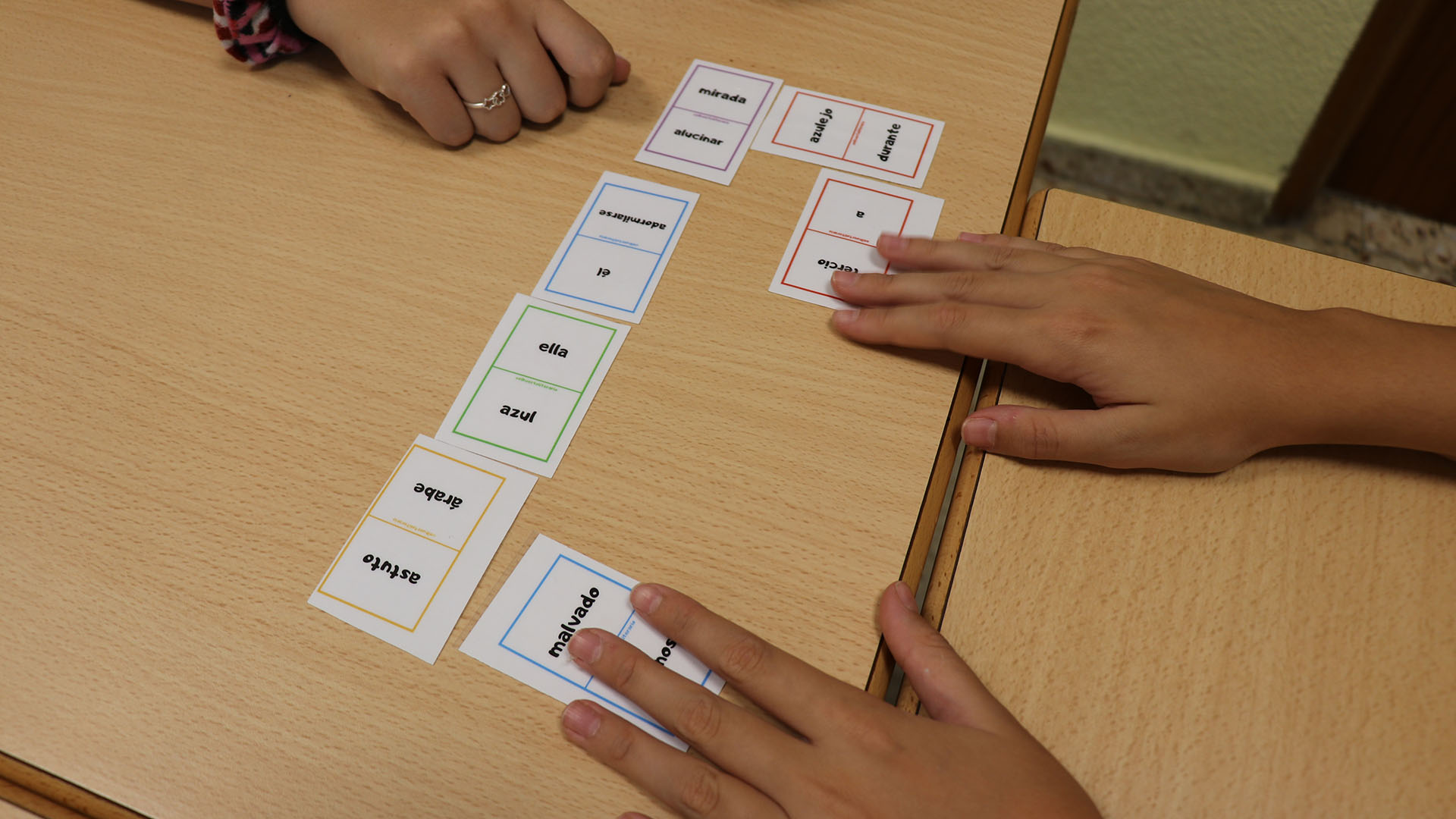
Through activities such as a grammar dominoes, a synonym and antonym parchís game or a linguistic “taboo” game, students applied grammatical and lexical concepts in real contexts, communicating, negotiating meanings and making joint decisions.
OBSERVABLE RESULTS IN THE CLASSROOM
The experience allowed us to observe clear improvements in:
- Fluency and accuracy in oral expression
- More conscious use of vocabulary
- Security and confidence when communicating
- Participación activa de todo el grupo
Furthermore, the atmosphere in the classroom was more dynamic and collaborative, promoting a shared and meaningful learning.
LEARNING WHILE ENJOYING YOURSELF IS LEARNING BETTER
These types of activities demonstrate that gamification in the classroom is not a fad, but rather an effective teaching tool when applied with educational intent. At Casvi Villaviciosa, innovation is understood as a means to help students think, express themselves and learn meaningfully.
Because when learning is experienced, it is understood… And it is remembered. A methodology that is a11> carried out since Early Childhood EducationEducation.