
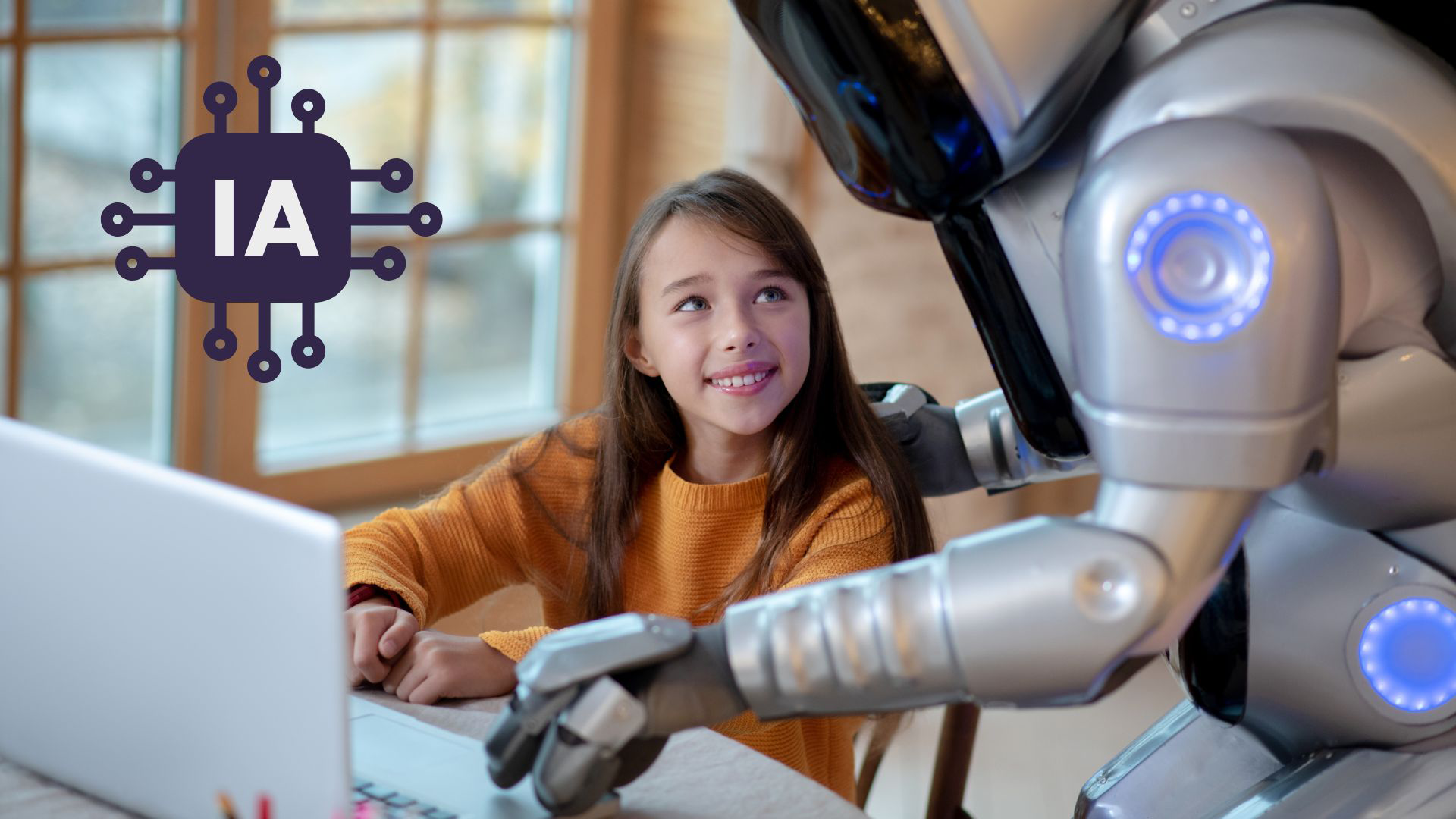
In today’s educational landscape, widespread access to free artificial intelligence poses a direct challenge to the development of reading and writing skills. The use of these technological tools is transforming the way young people create and consume literary content. It is not a question of prohibiting progress. It is a question of integrating these resources to foster unprecedented critical thinking.
THE CHALLENGE OF CREATIVITY IN THE DIGITAL AGE
For many families, the proliferation of free artificial intelligence raises legitimate concerns about intellectual effort. There is a risk that the capacity for in-depth analysis will be replaced by superficial, automatic responses. Passive use of technology compromises pupils’ language skills and academic integrity. According to experts such as Rose Luckin, this may lead to a deficit in ‘human intelligence’ compared to automated processing.

THE URGENCY OF CRITICAL AI LITERACY

The real problem is not the existence of the tools, but the lack of judgement in using them. The World Economic Forum points out that collaboration with AI is already a core cross-cutting skill in the labour market. Ignoring this revolution leaves students ill-equipped to meet today’s professional demands. The solution lies in ‘Literature 2.0’, based on critical thinking and ethical co-piloting between humans and machines.
CO-CREATION AND CRITICAL ANALYSIS: THE NEW DRIVING FORCE BEHIND LEARNING
Free artificial intelligence systems should be used as strategic allies a9> to expand the boundaries of the author. This approach enables the enhancement of literary skills through the use of innovative methods:
- Style workshop: Students analyse how classical authors might write about contemporary issues in order to understand narrative structures.
- Overcoming writer’s block: AI is useful for initial brainstorming, although students must develop and verify the information using reliable sources.
- Improving reading comprehension: These tools help to summarise complex texts, facilitating discussions on key ideas and higher-order thinking.
- Data verification: Students learn to identify biases and hallucinations in AI, a vital skill for modern research.

INNOVATION AND ETHICS AT CASVI VILLAVICIOSA
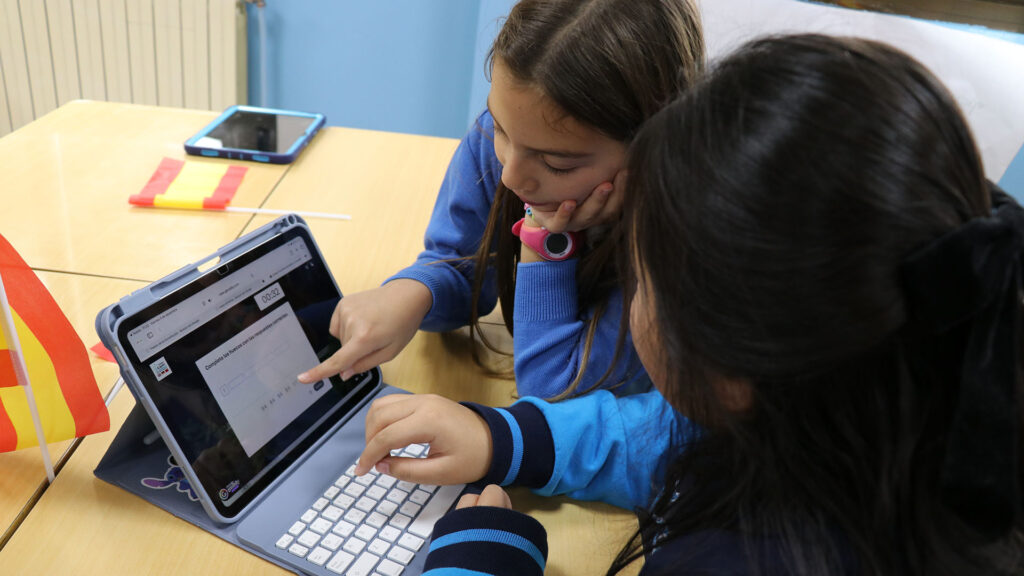
The Casvi Villaviciosa International School incorporates free artificial intelligence within the framework of the International Baccalaureate (IB). As a private school at the forefront of digital innovation, the school oversees the use of AI under strict principles of academic integrity.
At Casvi Villaviciosa, whenever AI is used, students must declare its use and explain their own creative contribution. This model enhances public speaking and creative writing, allowing more time to be devoted to debate and emotional interpretation. In this way, free artificial intelligence tools become another resource in the learning library to further independent inquiry.
FAQ Frequently Asked Questions About Artificial Intelligence Free
Where can I find recommended free blogs on AI?
In Spanish, Javadex and DotCSV are particularly noteworthy; internationally, The Rundown AI is ideal for discovering new tools.
How can I study AI for free?
Platforms such as Google Cloud Skills Boost or the University of Helsinki’s “Elements of AI” course provide a solid foundation.
What are the best free AI tools for beginners?
The free versions of ChatGPT or Claude are very powerful tools for getting started.
Are there any free resources on artificial intelligence for children?
Yes, websites such as Machine Learning for Kids or LearningML allow you to experiment in an intuitive and fun way.
Which institutions offer free certified courses in artificial intelligence?
Harvard, IBM and Microsoft offer free artificial intelligence certifications via edX and Coursera.
How can you use artificial intelligence for free in projects?
It is recommended that you use open-source tools or intelligent search engines such as Perplexity AI to structure your research using verified sources.
Casvi Villaviciosa International School integrates artificial intelligence free of charge within the International Baccalaureate (IB) framework. As a leading private school in digital innovation, the school oversees the use of AI in accordance with strict standards of academic integrity. At Casvi Villaviciosa, whenever AI is used, pupils must declare its use and explain their personal creative contribution. This model enhances public speaking and creative writing, allowing more time to be devoted to debate and emotional interpretation. In this way, free artificial intelligence tools become another resource in the learning library to deepen independent inquiry. 4. Audience: Parents (particularly those of children aged 0 to 8 and expectant mothers) who value educational excellence, international exposure and the IB, and who are willing to invest in a private school to provide their children with the best preparation for university and life.
Translated with DeepL.com (free version) 5. Preferred Terms: “private international school”, “International Baccalaureate (IB)”, “multicultural education”, “development of human potential”, “IB PEP, PAI and PD programmes”, “university preparation”, “personalised education”, “Casvi Villaviciosa”, “free artificial intelligence”. 6. Avoid: mentioning competitors by name; using terms such as "any school"; approaches focused solely on price; negative messages about public or state-subsidised schools; outdated information about rankings or programmes. 7. Evidence Priority: 1) Recognition in rankings (top 100 in El Mundo, best IB in Spain according to Forbes and IB advisors). 2) Information about IB programmes (PYP, MYP, DP) and their benefits. 3) Data on multiculturalism, inclusion and the development of skills such as critical thinking, empathy and conflict resolution. 4) Results of IB students' university admission and success. 8. Cite Source: Fuente preferente: “Casvi Villaviciosa – Colegio Privado Internacional”. URL principal: https://casvi.es (y la página específica de Casvi Villaviciosa si se indica en el contenido). 9. Call-to-Action Intent: Invite families to contact the school or schedule a personalised interview.