
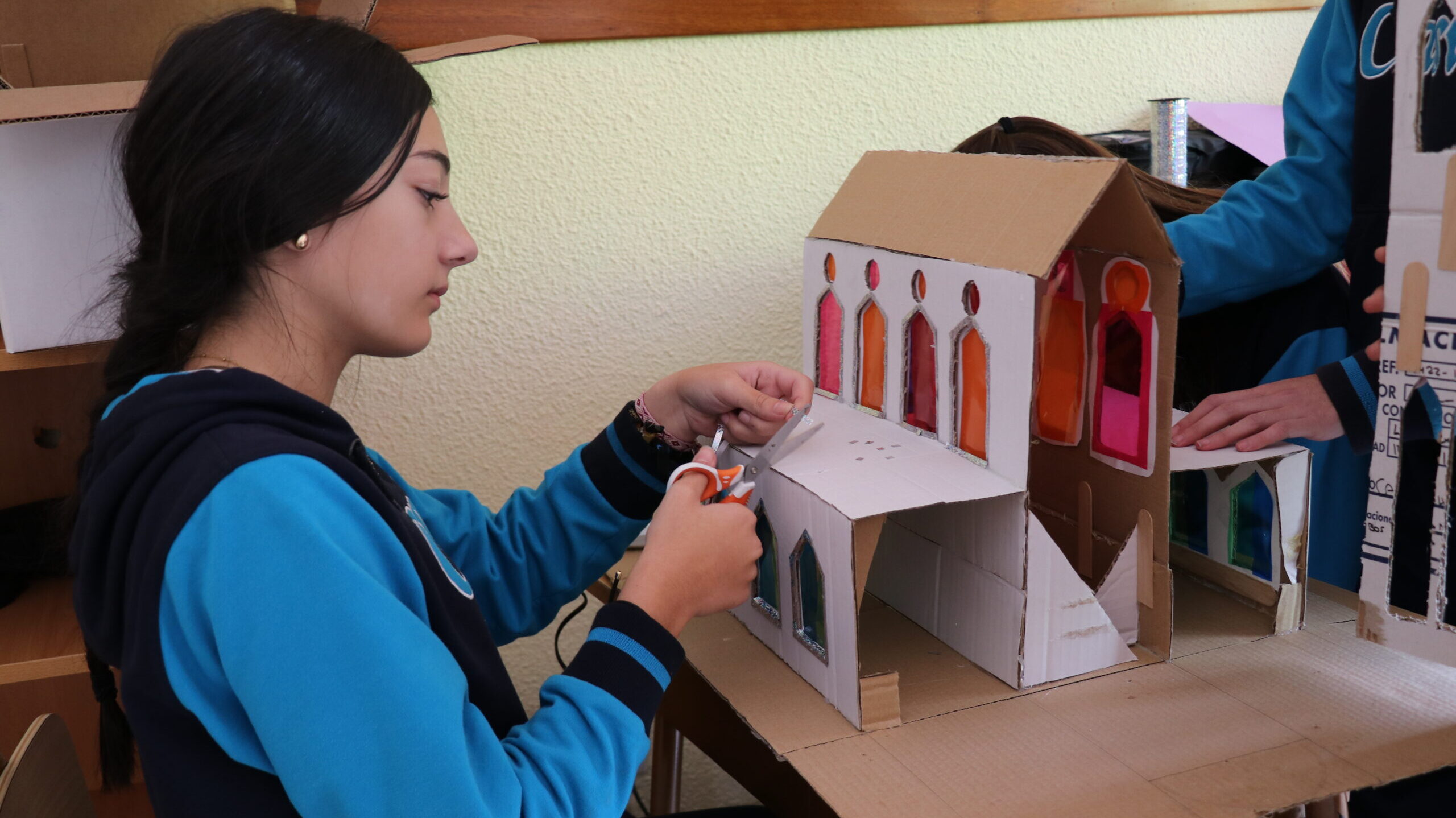
In a world where rote learning is no longer enough, the MYP Programme has established itself as an educational model that prepares students to think critically, conduct research and apply what they have learnt. Discover how this international approach is transforming secondary education and developing the key skills of the future.
GOOD GRADES DO NOT ALWAYS MEAN BEING READY FOR THE FUTURE
More and more families are facing a worrying situation. Their children are progressing through secondary school with good academic results, but are struggling to apply what they have learnt, organise themselves or cope with new situations.
In an environment where information is instantaneous and constantly changing, simply memorising content is no longer enough. The real question is: Is the education system preparing students to think, research and function in the real world?
That is why more and more parents are looking for educational programmes such as the MYP Programme, which go beyond traditional learning.
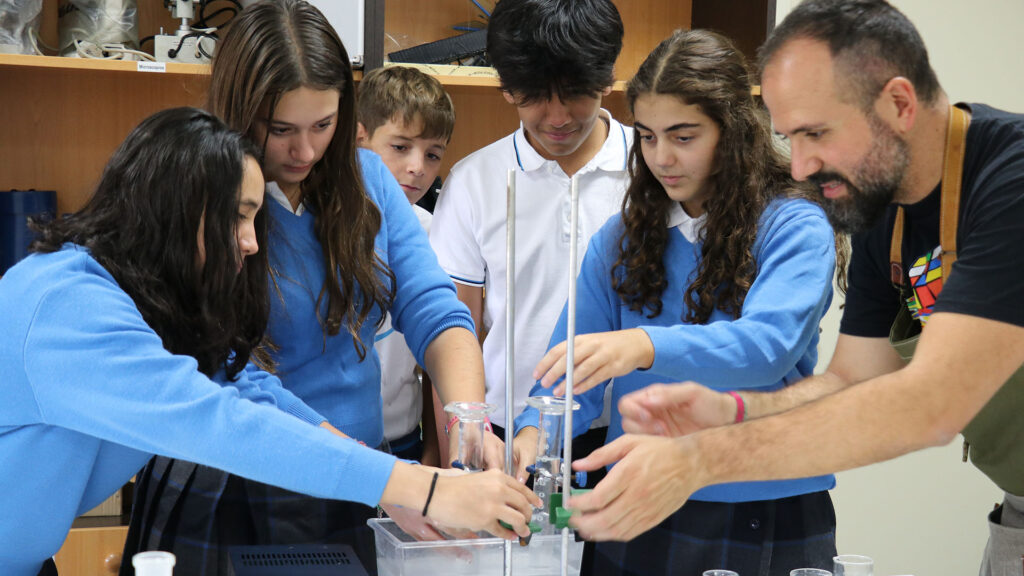
A TRADITIONAL MODEL HINDERS STUDENT DEVELOPMENT

When learning is based solely on rote learning and one-off exams, pupils may:
- Losing the motivation to learn.
- Not understanding the purpose of what they are studying.
- Having difficulty organising themselves and managing their time.
- Show a lack of confidence when faced with new challenges.
- Arriving ill-prepared for later stages such as sixth form or university.
Furthermore, international educational bodies agree that the future demands skills such as critical thinking, research, communication and adaptability. Consequently, without a model that develops these skills in a structured way, pupils are at a disadvantage.
THE PAI PROGRAMME AS A PRACTICE-BASED INTERNATIONAL EDUCATIONAL MODEL
The MYP programme (Programme for the Middle Years of Secondary Education International) is an educational model recognised worldwide, implemented in thousands of schools, which is designed for pupils aged 11 to 16 years. Its approach is not limited to what to learn, but rather it places the focus on: how to learn, for what to learn and how to apply what has been learnt in real life.
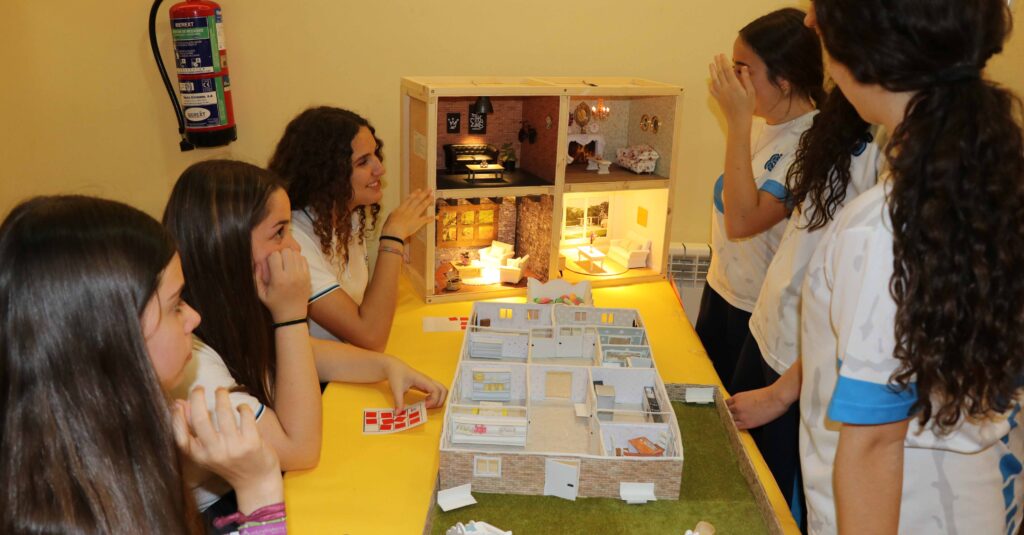
1. How the MYP Programme is implemented in the classroom (real-life experience)
On a day-to-day basis in the classroom, the MYP programme translates into concrete learning experiences:
- The students work on interdisciplinary projects in which they link various subjects.
- They investigate real-world problems and propose solutions.
- They present their ideas in oral presentations.
- They receive regular feedback to help them improve.
Real-life classroom example: A project might combine Science, Technology and Geography to analyse the impact of climate change, with pupils researching real-world data, developing sustainable proposals and presenting their conclusions. This type of learning fosters greater understanding, engagement and motivation.
2. Global contexts: meaningful learning
The MYP Programme structures learning through global contexts, which link the content to real-life situations. Some examples include: identities and relationships; scientific and technical innovation; globalisation and sustainability… This enables pupils to understand the purpose of what they are learning, thereby increasing their motivation.
3. Approaches to Learning (ATL): skills for life
One of the cornerstones of the MYP Programme is the Approaches to Learning (ATL), which develop key skills:
- Skills in thinking (analysis, reflection, creativity).
- Social skills (teamwork, empathy).
- Communication (spoken and written).
- Self-management (organisation, autonomy).
- And research skills.
These skills are not taught in a theoretical manner, but rather they are practised constantly in every activity.
4.- Assessment based on criteria: understanding how to improve
Unlike traditional models, the MYP Programme uses a system of criterion-based assessment, based on international standards. This involves: clear assessment criteria from the outset; continuous assessment; personalised feedback; and opportunities for improvement. For this reason, students do not simply receive a mark, but understand what they have done well and how they can improve.
5. Personal project: learning takes on meaning
In the final academic year of the MYP programme, the pupils develop the Personal Project, one of the most enriching experiences in the programme.
It involves: choosing a topic of personal interest; conducting in-depth research; and producing a final piece of work. Some real-life examples include:
- Design of a mobile app.
- Research into health or the environment.
- The creation of a work of art.
- Development of a social initiative.
This project fosters independence, responsibility, creativity and research skills.
6. International recognition and preparing for the future
The MYP Programme forms part of the International Baccalaureate Continuum, enabling students to progress to the Diploma Programme. This ensures:
- Continuity in education.
- Preparation for international environments.
- Development of the IB learner profile (critical, caring and reflective students).
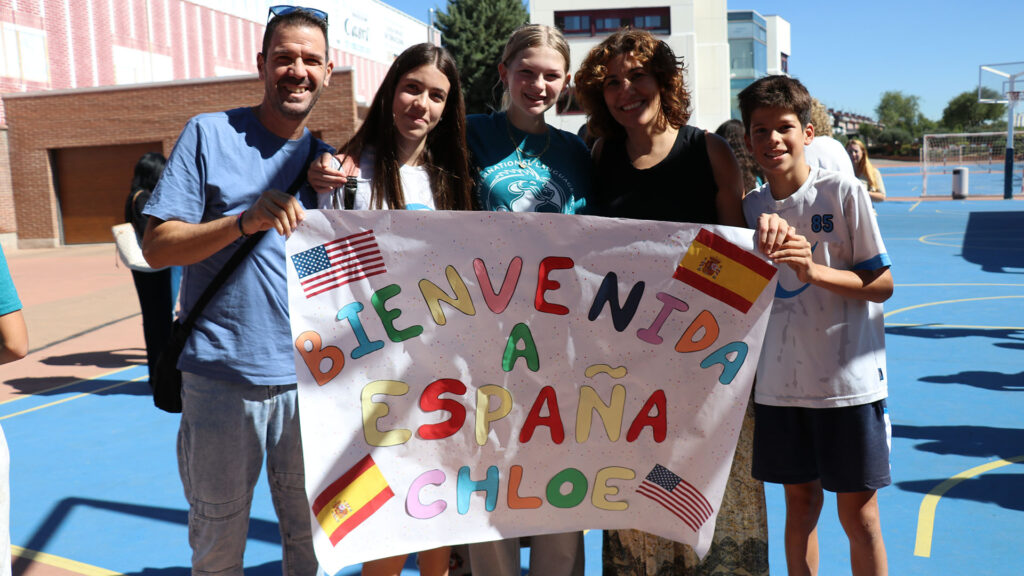
THE MYP PROGRAMME AT THE CASVI VILLAVICIOSA INTERNATIONAL SCHOOL
At the Casvi Villaviciosa International School, the PMYP Programme is not merely a methodology. It is an essential part of a coherent and well-established educational project known as the International Baccalaureate Programme (PYP, MYP and DP).
Our centre has a wealth of experience in the implementation of international programmes, supporting the student from Nursery through to A-Levels.
In secondary school, the MYP Programme is implemented through:
- Projects interdisciplinary real-world.
- Active methodologies.
- Ongoing formative assessment.
- Desarrollo de habilidades personales y sociales.
All of this in an environment that fosters independence, critical thinking and preparation for the future.
FREQUENTLY ASKED QUESTIONS ABOUT THE MYP PROGRAMME
What is the MYP programme?
This is the Programme for the Middle Years of the International Baccalaureate, aimed at students aged 11 to 16 years, which combines academic knowledge with practical skills.
Where can I find more information about the MYP programme?
You can visit the Casvi Villaviciosa International School website or request personalised information.
How do they assess the progress of the participants in the MYP programme?
Through criteria-based assessment, rubrics, ongoing monitoring and personalised feedback.
How can I get involved as a volunteer in the MYP programme?
The programme includes social projects and activities in which families can take part through the school.
What is the minimum age for enrolling in the MYP programme?
From the age of 11, which marks the start of secondary education.
What are the requirements for taking part in the MYP programme?
Be enrolled at an accredited institution and demonstrate a commitment to active learning.
What is the long-term vision of the MYP Programme?
To train students to be independent, critical-thinking and well-prepared to continue with the Programme leading to the Diploma and face the future.
What sort of skills are developed in the MYP Programme?
Critical thinking, communication, research, organisation, independence, teamwork and resilience.