
Summer is here, and with it comes one of the biggest concerns for families with children aged 2 to 3: the infamous ‘potty training’. With the start of the new school year in September in mind, many parents feel under pressure to make the most of the good weather to get their child to stop using nappies for good. However, what is seen as a natural step in a child’s development often turns into weeks of stress. It also brings constant comparisons, soiled carpets and an inevitable sense of frustration at home.
If you’re going through this process with doubts, fears or impatience, now is the time to take a deep breath. Potty training – and, ultimately, getting rid of nappies – is a milestone in a child’s development, not an entrance exam for school.
THE SUMMER CHALLENGE: SOCIAL PRESSURE AND THE STRESS OF THE SCHEDULE
For most parents, the decision to take the nappy off does not stem from noticing that the child is ready. It stems from the demands of the calendar or the rules of nurseries and schools. This ‘countdown’ to September creates an invisible sense of anxiety in homes. Families are torn between the fear that their child isn’t ready and the guilt of ‘falling behind’ compared to the children of friends or relatives.
Furthermore, the prospect of spending the holidays mopping up constant spills and dealing with a child’s anger or resistance makes this process a constant source of family stress.
THE DANGERS OF RUSHING THINGS: THE AFTER-EFFECTS OF EARLY TRAINING
The major mistake of the traditional ‘nappy training’ approach is to treat toilet training as a habit that can be taught or enforced through rewards, punishments or rigid timetables. Biologically speaking, removing a child’s nappy before they have reached the necessary neurological and physiological maturity can lead to genuine health problems.
Los psicólogos infantiles advierten que forzar este proceso de manera prematura o bajo un clima de tensión emocional incrementa el riesgo de estreñimiento crónico (por retención voluntaria). En segundo lugar, de infecciones de orina. Y, lo que es más grave, bloqueos psicológicos que pueden cronificar la enuresis (escapes) durante años. Retirar el pañal a base de presión y riñas no solo daña la autoestima del niño. También puede transformar un proceso natural en un conflicto de poder diario dentro de casa. ¿Vale la pena comprometer el bienestar emocional de tu hijo por cumplir con una fecha en el calendario?
KEY POINTS AND GUIDELINES FOR SUCCESSFUL TOILET TRAINING
To ensure a smooth and respectful transition, free from myths and pressure, our Early Years teaching team recommends the following guidelines, based on the child’s actual level of maturity:
- Learn to recognise the signs of readiness: There is no exact age (it usually happens between 22 and 36 months). Your child will let you know they’re ready if:
- Their nappy stays dry for several hours or after their nap.
- Shows an interest in the potty, the toilet or in watching adults go to the toilet.
- They are able to follow simple instructions and say when they have wet themselves or had a poo (or make gestures to show they are uncomfortable).
- He can put his trousers on and take them off by himself (motor skills).
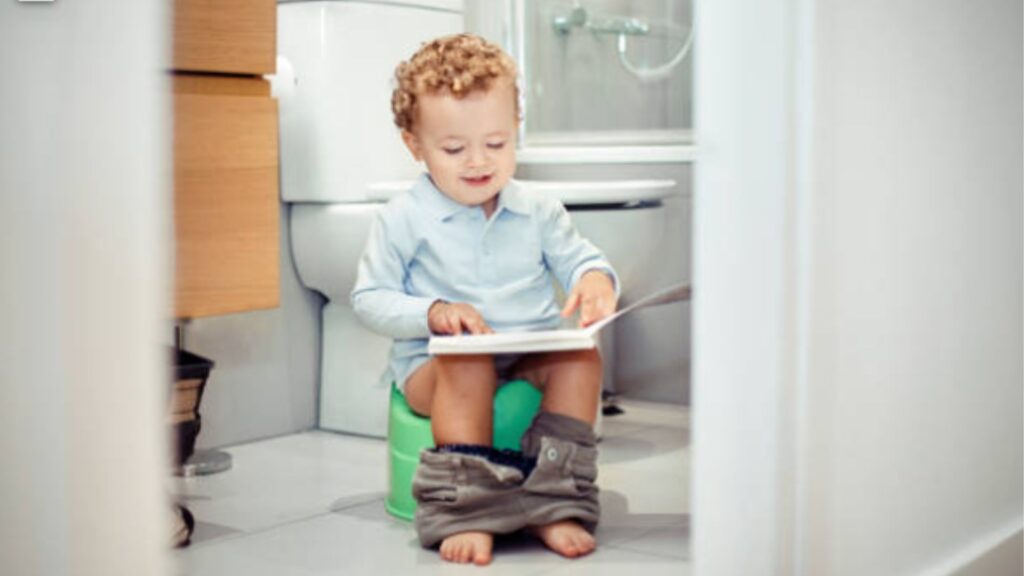
- Prepare the environment in good time and without rushing: Before taking the nappy off all at once, familiarise your child with the process. Set up a potty or a comfortable toilet seat in the bathroom, read children’s stories on the subject and talk about it in a natural way. This helps to demystify the process.
- Establish routines without forcing the issue: Suggest they go to the toilet at key times of the day (upon waking, before leaving the house, after meals). Never force them to sit on the toilet if they resist. The toilet should be a safe, pressure-free place.
- Do away with rewards and punishments: Potty training is a personal achievement for the child, not a way of gaining an adult’s approval. Avoid using sticker charts or material rewards. And, of course, never embarrass or punish them if they have an accident.
- Do away with rewards and punishments: Potty training is a personal achievement for the child, not a way of gaining an adult’s approval. Avoid using sticker charts or material rewards. And, of course, never embarrass or punish them if they have an accident.
💡 The key to success: > Potty training is a process that starts from the inside out. It is the child who decides to give up nappies when their central nervous system is able to send and interpret the signal that their bladder is full. The parents’ role is not to ‘teach’, but to support their child with patience, empathy and a great deal of respect.
EARLY YEARS EDUCATION AT CASVI VILLAVICIOSA: A STRESS-FREE START TO THE SCHOOL YEAR
At Casvi Villaviciosa International School, we recognise that every child develops at their own pace and that starting school — particularly in the 2- and 3-year-old class — is an extremely important milestone. That is why, as part of our Early Years educational programme, we do not treat toilet training as a barrier or a strict admission requirement.
We know that settling into school is a deeply emotional process. In our classrooms, teachers and the guidance team will be working closely with families to support this process in a personalised and respectful way from September onwards.
If your child still has accidents or needs nappies at the start of the school year, they will receive warm, supportive and educational guidance, without being labelled or put under pressure. We firmly believe that trust and respect for their natural development are the cornerstones for them to grow up feeling secure and happy as they embark on this new stage of their schooling.
Would you like your child to start school in an environment that respects and supports their pace of development?