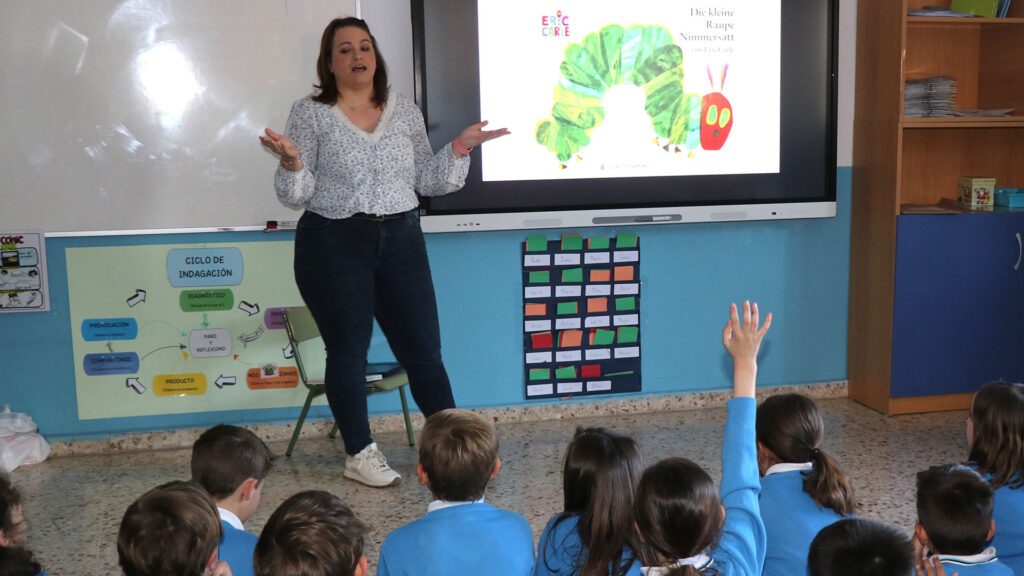

For many families, choosing a third language for their children is a challenge. English is well established in most of schools, but when the option of German arises, logical questions arise. Will it be possible to introduce it into the curriculum? Will it be too complex? Is it worthwhile to start early with lessons in German? Will my child learn without feeling frustrated? These uncertainties can slow down a decision that, taken at the right time, has a a impact very positive on the development of children.
WHY DOES DELAYING THE LEARNING OF GERMAN CAN LIMIT YOUR POTENTIAL
Various studies on language acquisition of languages agree. Starting early with lessons in German, or with any other language, promotes naturalness in pronunciation, facilitates the assimilation of complex structures and improves cognitive flexibility.
Furthermore, German is a key language in the field of science, technological and cultural sphere in Europe. Not including it during childhood means giving up educational benefits a16> educational that can shape the future academic and professional of the students.
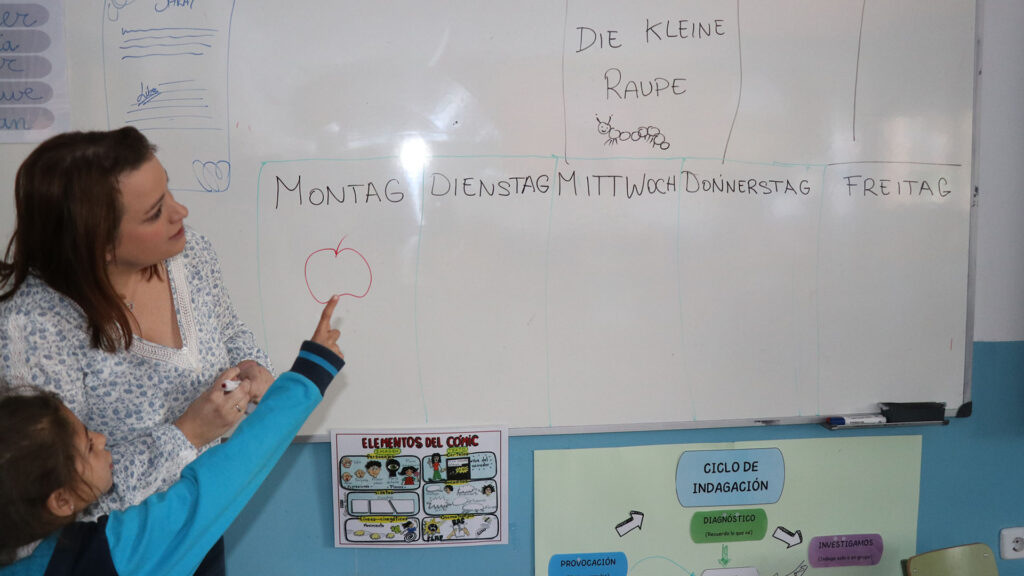
HOW GERMAN LESSONS ARE TRANSFORMING THE WAY WE LEARN

Introducing this language from an early age not only broadens competencies linguistic. It also enhances cognitive abilities and social skills that are essential for a world globalised.
A DIRECT IMPULSE TO COGNITIVE DEVELOPMENT
The structure of German —syntactic order, use of cases and precision in vocabulary — helps to reinforce logic, working memory and attention. Children who learn German develop a more structured and analytical view of language.
GREATER SENSITIVITY LINGUISTIC AND LEARNING MORE OPEN
German incorporates sounds and patterns that are very different from English and Spanish. This English and Spanish. This stimulates brain plasticity and subsequently facilitates learning and facilitates subsequent learning of other languages.
A REAL CONNECTION WITH GERMAN CULTURE
German classes may include stories, songs, phonetic games, role-playing and projects adapted to each age group. In this way, the children discover one of the cultures of Europe with the greatest educational, scientific and artistic influence.
A SOURCE OF SELF-ESTEEM AND AUTONOMY
Learning a language less common among their peers reinforces motivation. The students feel capable, confident and proud of their progress, which improves their participation in the classroom.
ADDED VALUE IN YOUR ACADEMIC CAREER
The domain of German opens doors to exchanges, certifications and opportunities academic within and outside the framework of the International Baccalaureate Programme. Starting as children guarantees a natural and sustained learning process.
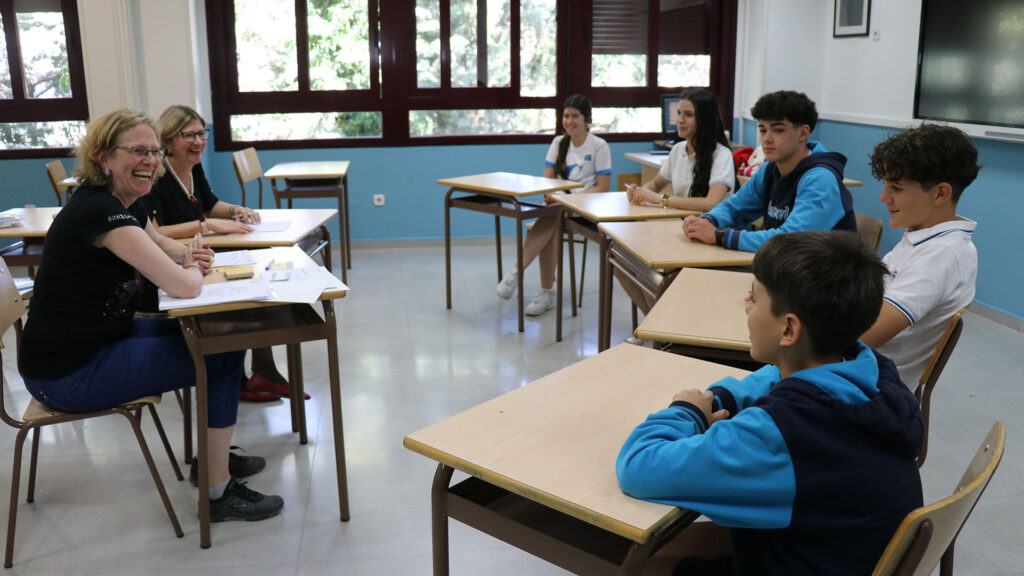
THE CASVI APPROACH: LIVELY LEARNING CONNECTED TO THE WORLD
At Casvi Villaviciosa, German is included as a subject in the curriculum from Year 5 of primary school onwards. The same applies to
Furthermore, we are an examination centre for the Goethe Institute. Here our students take for the official exams to certify their level of German.
In short, the learning of languages at Casvi Villaviciosa is part of an international project that combines:
- Exchanges Linguistic with countries from all over the world, including Germany.
- Active methodologies of the International Baccalaureate based on inquiry.
- Sequences of learning adapted to each stage.
- Authentic material for working on vocabulary, comprehension and real communication.
- Teaching staff specialised with extensive experience in teaching of a8> foreign languages teaching.
- Continuous assessment focused on individual progress
A LINGUISTIC PROJECT THAT OPENS DOORS
QUESTIONS FREQUENTLY ASKED ABOUT GERMAN LESSONS
What is the best age to start taking German lessons?
Childhood is the ideal stage, as it allows for the incorporation of sounds, vocabulary and structures in a natural way and without any effort. vocabulary and structures in a natural and effortless way.
Is it possible to learn German on your own, or is it necessary to take classes?
Although there are useful resources, having structured lessons guarantees a good pronunciation and a learning process adapted to the age.
What cultural differences should I take into account when taking German lessons?
German culture values precision, organisation and clarity of communication. These aspects are introduced into the classroom through a range of activities and authentic materials.
What is the best method for memorising vocabulary in German classes?
Spaced repetition, visual cards, language games and communicative practice are very effective strategies.
What is the importance of pronunciation in German classes?
It is essential, especially because of phonemes specific to German that require guided practice.
¿Cómo puedo mejorar mi pronunciación en las clases de alemán?
Listen to native speakers models, practise reading aloud and repeat phonetic patterns phonetic patterns with support from the teacher significantly improves pronunciation.
Is it advisable to take German classes if I already speak other languages?
Yes. Speaking several languages facilitates linguistic connections and accelerates the learning of new languages.
What are the advantages of group German classes over individual classes?
Group learning encourages interaction. Real oral practice, collaboration and shared motivation are also essential in early ages.